The campus was abuzz with energy and excitement as a multitude of happy students filled the halls and courtyards.
View all countries
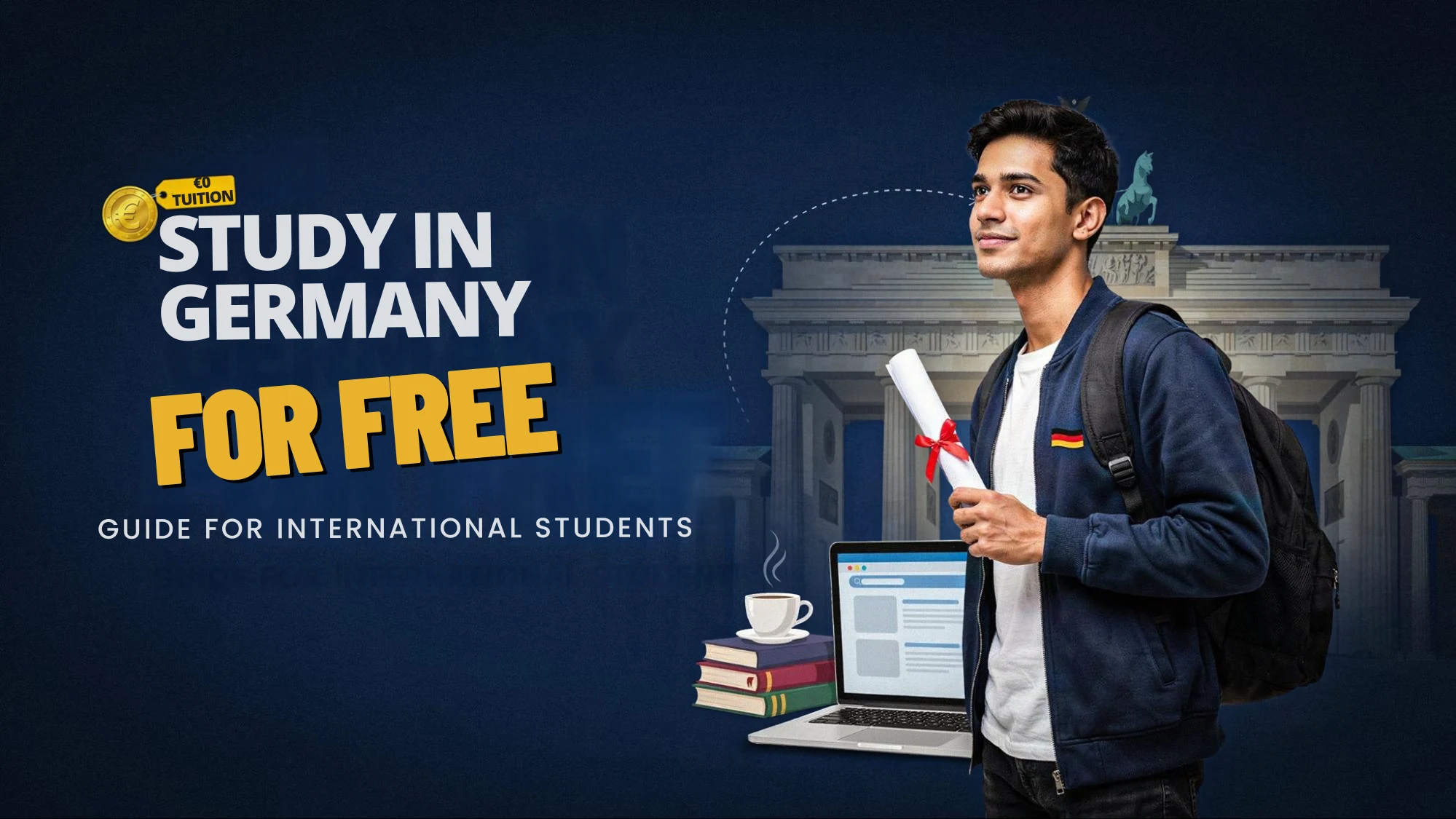
Deciding where to pursue your studies abroad will prove to be one of the major decisions that you will make concerning your future. It involves the search for an academic institution that can offer quality education, exposure to new cultures, and opportunities that can differentiate you from other individuals in the competitive international job market. Germany has turned out to be one of the popular choices of foreign students due to its academic standards and affordable tuition fees. This guide will help you understand how you can study in Germany for free, what makes the country such an attractive choice and the exact steps you need to follow to secure admission.
Germany is one of the most preferred countries to study worldwide, and there are many reasons why that is so. You have the opportunity to study in universities which have been ranked amongst the very best in the world in their particular subjects, such as engineering, medicine, business, and social sciences.
Germany is renowned as being innovative and technologically advanced, thus providing you with exposure to the latest in your particular sphere of interest. Besides education, Germany also has much more to offer in terms of its culture. You can explore historic cities, enjoy diverse cuisines and connect with students from across the globe.
Many public universities do not charge tuition fees, but exceptions exist. For example, Baden-Württemberg generally charges tuition for many non-EU/EEA students, and some programmes/universities may have additional tuition fees.
Private universities generally charge tuition fees, and the amount varies significantly depending on the university and programme. That’s why most international students prefer public universities. Free education doesn’t mean lower quality; German public universities are known for their rigorous academic standards and global recognition.
Read to know: Top 10 Benefits of Studying Abroad in Germany
Public Universities | Private Universities |
Many public universities do not charge tuition fees but exceptions exist | Private universities generally charge tuition fees, which can vary substantially by programme and institution |
Funded by the government | Funded by private organisations |
Wide rage of programmes | Specialised programmes in business, arts, or design |
Large student population | Smaller, more personalized classes |
Semester contribution only | Tuition fees plus applicable semester contributions. |
For most international students, public universities are the best choice. They offer high‑quality education without any financial burden. However, private universities are ideal if you are looking for specialised programmes or prefer smaller class sizes, but they are quite costly.
While tuition is free, you need to plan for living expenses. On average, you spend €900–€1,200 per month on accommodation, food, transport and insurance. Many students work part‑time to support themselves, and Germany allows up to 20 hours of work per week during semesters. Public transport is affordable, and your semester contribution often includes unlimited travel within your city. Student discounts on food, entertainment, and travel make life easier.
Germany provides great post-study work prospects. You can spend up to 18 months looking for a job, using an extended residence permit after graduating. Foreign students get jobs in the spheres of engineering, IT, healthcare, and business. Germany’s prosperous economy and need for highly skilled specialists provide you with a chance to smoothly transition from studies to your successful career.
Prior to embarking on this journey, it would be helpful to break the process into clear steps, so that you know exactly what to do and in what order.
Germany has over 300 public universities, and almost all of them charge no tuition, even for international students. Focus on where your subject is strong rather than just chasing a famous name. Some of the popular public universities include:
For assistance and support with studying in Germany, Edroots can help you.
Germany offers several scholarships and funding opportunities for international students. Start by checking scholarships provided by universities, government organisations, and other educational institutions. The DAAD is a well-known source of scholarships for international students in Germany.
Some scholarships may cover tuition fees, living expenses, travel costs, or other study-related expenses. You can also explore university-specific funding options and scholarships based on academic performance or other eligibility factors. Applying early and carefully preparing your documents can improve your chances of securing financial support for your studies.
Also read: How UAE Students Can Study in Germany with a DAAD Scholarship?
Choose a programme which corresponds with your career aims. There are many programmes available in English, especially at the master’s level, making it easier for you to adapt, and most of them are tuition-free.
Your previous degree or qualification must be recognised as equivalent to the German standard. UAE students should confirm their qualification's equivalency through the Ministry of Education, then check Uni Assist's Vorprüfung tool or the university directly for exact requirements.
For English-taught programmes, students usually need an IELTS score of 6.0–6.5 or higher, or a TOEFL score of 80–100 or higher. For German-taught programmes, students generally need German language proficiency demonstrated through TestDaF or DSH certification.
Some programmes (especially MBA or select master's degrees) may require GRE or GMAT scores. Competitive courses require relevant work experience, a portfolio (for design/architecture), or an entrance interview.
Gather all the essential documents required for your application, including academic transcripts, certificates, SOP, LORs and proof of language proficiency. Ensure that the information is accurate and that the documents are properly organised before submission.
Check the specific document requirements of your chosen university and programme to avoid missing anything important. Preparing your documents in advance can make the application process easier and more efficient.
Although the education is free of charge, you still need to prove that you have the means to cover your living costs. The so-called Blocked Account containing approximately €11,904 per year is necessary for your visa application. After receiving your admission letter, you can start applying for a student visa.
Studying for free in Germany is an attainable objective. It is possible to obtain excellent quality of education without any tuition fees by opting for public universities and making sure that you follow the correct procedure. Edroots will help you throughout the process of your application and ensure that everything goes as smoothly as possible.
Edroots helps students through all phases of international education, starting from selection of universities to document preparation and visa assistance.
Edroots UAE assists you in the following ways:
With Edroots UAE, you can submit your application with full assurance and certainty, knowing that professionals are making your dream of studying in Germany come true. Let the experts do all the work while you concentrate on education and your future career. You have an opportunity to study without having any financial concerns, to live in a lively student environment and to make a career in one of the best economies in the world.

Considering the January 2027 intake in the UK? Learn about admission opportunities, application timelines, and the benefits of starting your higher education journey in the UK this winter.

Canada in 2026 or 2027? Learn how the study permit cap works, who needs a Provincial Attestation Letter (PAL) or Territorial Attestation Letter (TAL), and which students are exempt.
Discover the financial proof options available for German student visas, including alternatives to blocked accounts, sponsorship, scholarships, and other ways to demonstrate sufficient funds.


 Australia
 United Kingdom
 Canada
 Germany
 Malaysia
 New Zealand