The campus was abuzz with energy and excitement as a multitude of happy students filled the halls and courtyards.
View all countries

Students in the UAE typically focus first on obtaining admission letters, but the visa stage often determines how smoothly their plans progress. Every country requires its own set of papers, timelines, and checks, so the process doesn’t work on a single template. Understanding what the embassy expects of you before you begin makes the entire process less stressful and helps you avoid last-minute hassle.
Planning to study abroad is an exciting step, but securing a study visa requires careful attention to key requirements, documentation, and regulations to ensure a smooth application process. Here are some important things UAE students should consider:
Visa applications are not handled overnight. Embassies work with fixed appointment windows, and those slots fill quickly during peak seasons. Students also forget how long routine steps can take. School certificates need attestation, banks take time to issue the correct letters, and some countries ask for medicals or insurance before you even book an appointment. If any document needs correction, the entire timeline shifts again.
Starting early helps you deal with university cut-off dates. Many institutions overseas will not extend the joining deadlines because your visa was delayed. When you begin the process early, you can manage the tasks like collecting transcripts, confirming financial formats, and preparing for biometrics, and avoid rushing through important checks that embassies pay close attention to.
Each country sets its own visa rules, and they rarely resemble one another. One focuses on financial capacity, another asks for detailed academic records, and some want police checks or medical results before they look at the file. Follow the embassy’s checklist because that is what the officer follows while reviewing your documents. UAE students also need to check if their certificates require attestation from local authorities. When these details are understood at the start, the file moves without repeated corrections or fresh appointments.
Officers look at the account and want to see normal activity, not sudden transfers that appeared right before the application. Sudden deposits or missing details usually draw attention, so the documents need to present a steady pattern. If a parent or relative is paying, their income records and proof of relationship must match what you state on your form. Students using an education loan need the sanctioned letter, not just an application. Some countries also check how long the funds have been maintained.
Also read, How to Fund Your Studies Abroad?
Academic papers are often where delays start, usually because something small was overlooked. A missing page in a transcript, an old spelling error in a certificate or a stamp that was never collected from the school office – these issues show up only when the file reaches the visa stage. Many countries also want UAE documents attested through the school, the Ministry of Education and the Ministry of Foreign Affairs, and each step takes time.
Most universities abroad rely on IELTS, TOEFL or similar exams to assess whether a student can manage coursework in English. Scores must match the program’s minimum requirements, and some countries also expect these results for the visa stage. Problems mainly arise when students submit old scores or select a test that their destination does not accept. It helps to book the exam early, keep the score report ready in the correct format and confirm that the university and embassy recognise that specific test.
Medical checks and biometrics are routine, but they slow students down more than any other step. Approved clinics give limited dates, and some students only realise this after their offer letter deadline has passed. A simple issue in the report, like unclear readings, can send you back for another round, and the visa file stays untouched until the clinic updates the system. Biometrics work the same way with fixed slots and strict ID checks. Keeping your passport, old reports and appointment details in one place helps you move through these steps without avoidable setbacks.
Students often assume part-time work rules are the same everywhere, but every country sets its own limits. Some allow a fixed number of hours each week, others restrict work to the campus, and a few do not permit employment at all during the first semester. The way wages are handled, the documents an employer will ask for, and the kind of work you are allowed to take vary widely. Some places are strict about who can hire a student and for how many hours. If you are unsure, always double-check the rules before joining the job.
As one of the leading study abroad consultants in the UAE, we understand that studying abroad is a life-changing decision, and we are here to support UAE students at every step of their journey. From the moment a student begins exploring overseas education options, we provide personalised guidance based on their academic background, career goals, and preferred destinations.
When students come to us, the first thing we do is look at their documents the same way an embassy officer would. If something is missing, unclear or needs attestation, we point it out early so the file does not get stuck later. We also go through the course offer and explain what that specific country expects for the visa stage, because the rules rarely match from one place to another.
English tests, financial papers and medical checks create most of the confusion. But we help you in breaking these parts down one by one for better clarity. If something does not add up or the bank has issued it in an unusual format, we tell them exactly what to fix. Medicals and biometrics bring their own set of questions, and we point them to clinics and centres that the embassy accepts. While all this is happening, we keep an eye on their admission dates so nothing misses the deadline.
If you want us to guide you through this tedious process, contact us now.

Career in the UK in 2026 Explore everything about choosing a cybersecurity career in the UK in 2026, including skills, job roles, salaries, and future growth opportunities.
6a1fab2175535.webp)
Stay informed about the latest New Zealand Post Study Work Visa (PSWV) updates for 2026. Learn about eligibility changes, visa pathways, work rights, and what international students need to know to plan their future in New Zealand.
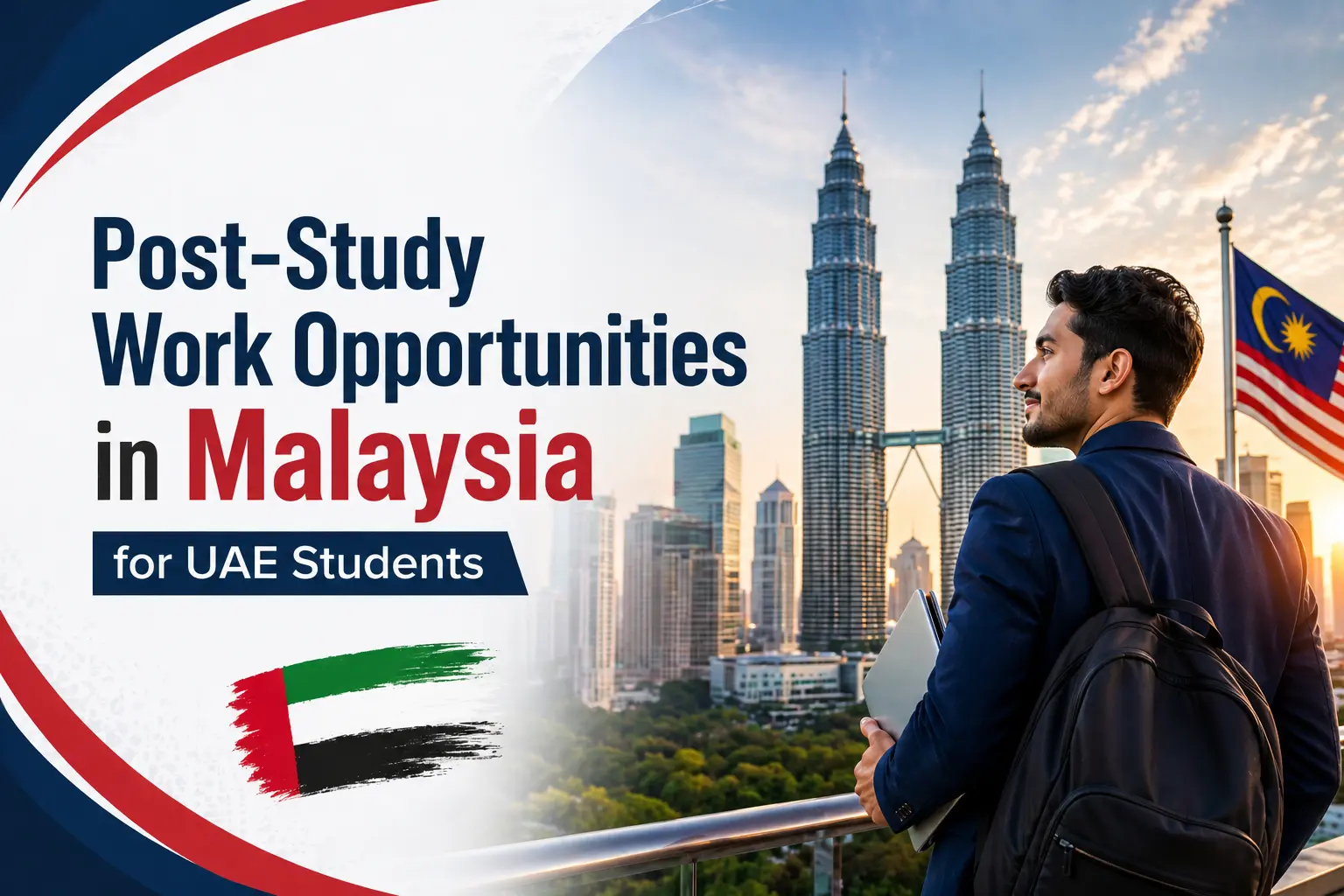
Explore post-study work opportunities in Malaysia for UAE students. Learn about visa options, job prospects, and how to build a successful career after graduation.


 Australia
  United Kingdom
  Canada
  Germany
  Malaysia
  New Zealand